

Milazzo’s “Cuba”
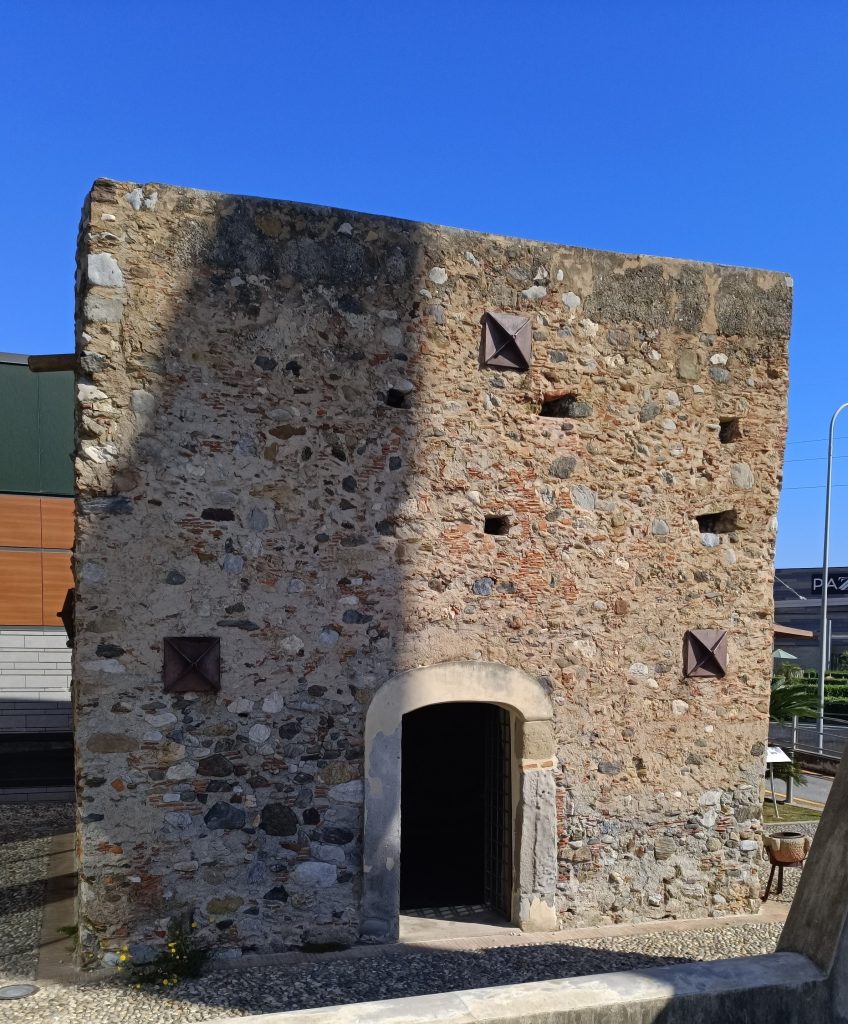
The “Cuba” of Milazzo near the Masseria district probably falls within the category of small grange dependent on larger monasteries. The structure, incorporated into a modern farmhouse, is difficult to identify. From Norman documents we learn of the existence of at least two metochi located on the Milazzo plain. The first is known by the toponym of San Teodoro and has been the grange of the Santissimo Salvatore of Messina since 1133 AD. Filangieri ruled on the location of this monastery, believing that it should be located not far from the locality of the same name located along the western coast of the Milazzo peninsula. It seems that in the years ‘70 of the 20th century there were some ruins relating to the sacred complex still in activity in the 16th century. In fact, the election of the abbot was recorded in 1520. Today it is difficult to recognize the locality of the same name and the tablets IGM 1:25000 do not indicate any toponym linked to the presence of the monastery of San Teodoro along the entire peninsula and the coast southwest of Milazzo. However, more information on the existence of San Teodoro comes from Perdichizzi, a historian of the late 17th century, a source unknown to Filangieri and now known thanks to a recent publication. The chronicler locates the ruins of the monastery of San Teodoro along the peninsula, exactly to the northeast, remembering it near the sea.
He emphasizes the existence of two religious nuclei, the original one, presumably from the Norman era, bordering the coast, destroyed by corsairs and a second, more recent one, built far from the sea and equally destroyed. The second metochium of Milazzo is known through a document from 1144 AD, a diploma issued by King Roger. The text is related to the possessions of the monastery of S. Maria di Gala and takes up the original foundation deed issued by Countess Adelasia in 1105 AD The document mentions the monastery of Sant’Euplio. It seems that in the 17th century it was still possible to distinguish the ruins of the sacred complex and the church.
In the current state of studies, the “Cuba” of Milazzo remains, consequently, anonymous like the “Cube” built along the Alcantara Valley (“Cuba” of Malvagna, “Cuba” Imbischi, “Cuba” Ianazzo). It would be possible to judge the small building as a rural religious building, presumably belonging to a small metochium that has now disappeared, also serving the surrounding countryside.
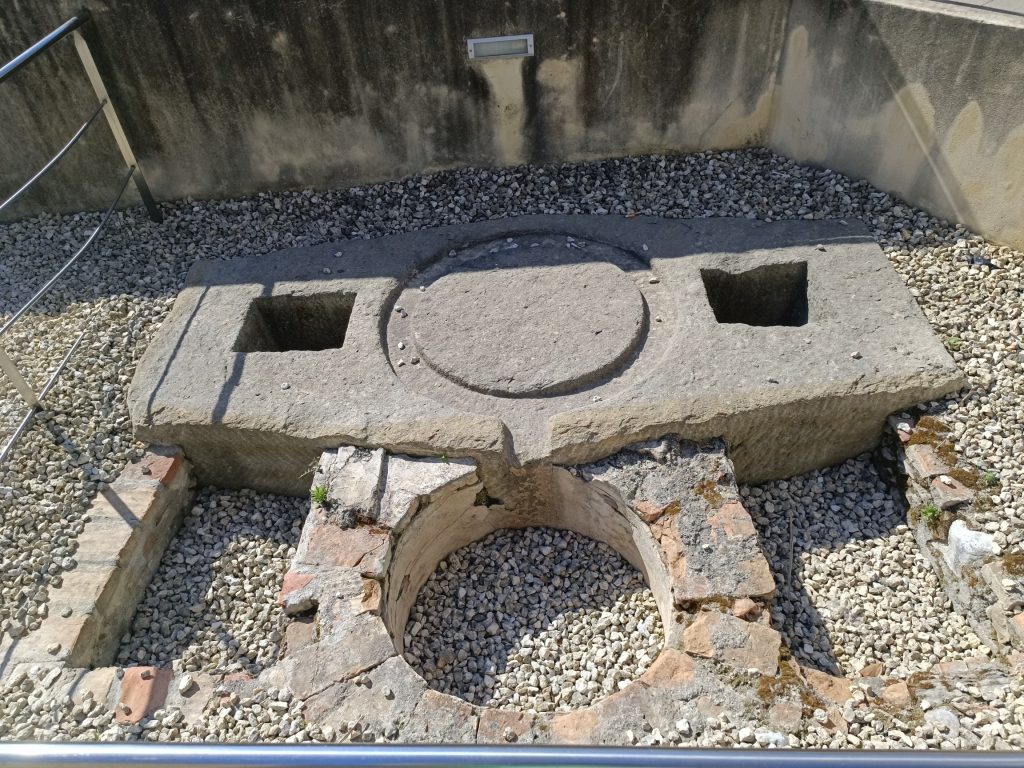
Initially conceived as an isolated building, over the centuries it has been incorporated into other buildings that were part of an agricultural settlement, which no longer exist today, with the exception of a room in front of the entrance to the “Cuba”, intended for an oil mill or palmento and a cistern for collecting water.
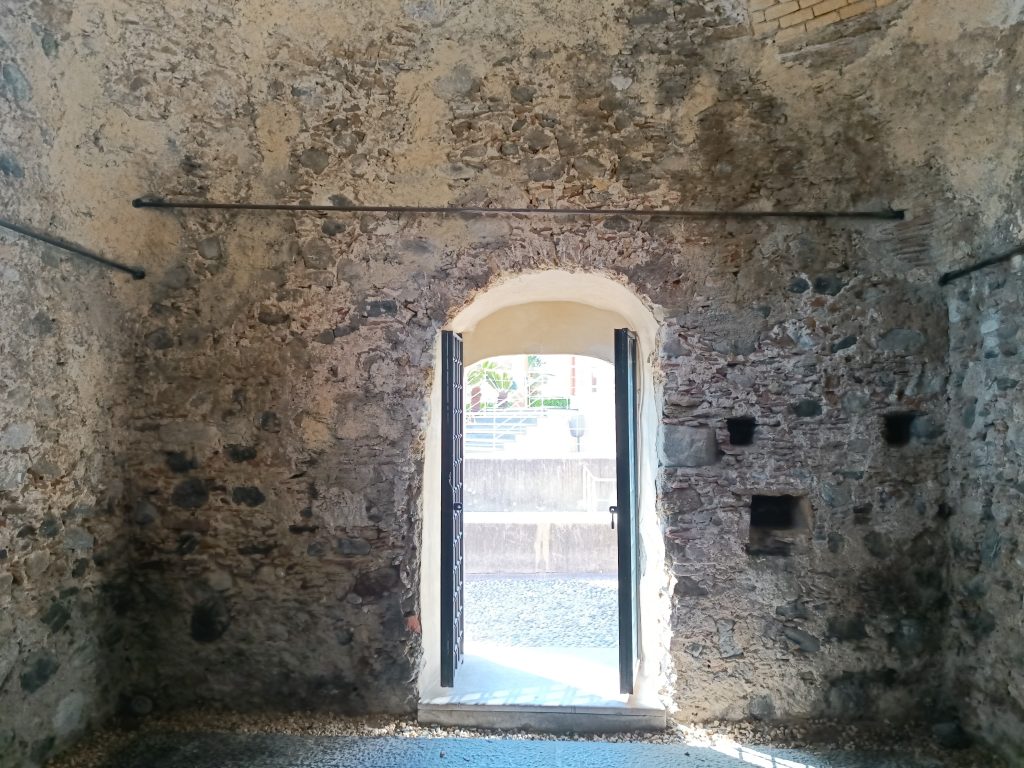
The only existing room is accessed through a segmental entrance located along the southern wall. Daylight enters through two square windows located along the walls facing east and west respectively, both presumably built around the 16th century. The room is devoid of any decoration and, if present at the time of construction, has been lost over the centuries.
In the northwest corner there is an opening that allowed access to a small terrace, a variation perhaps made by virtue of its transformation into a small tower.
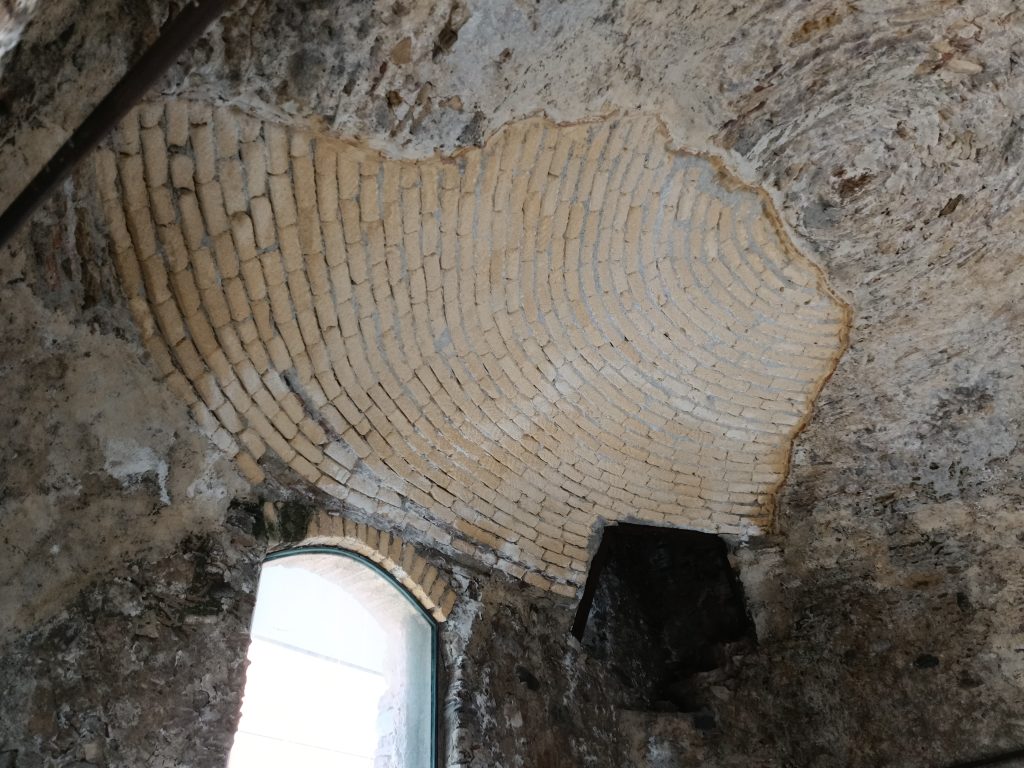
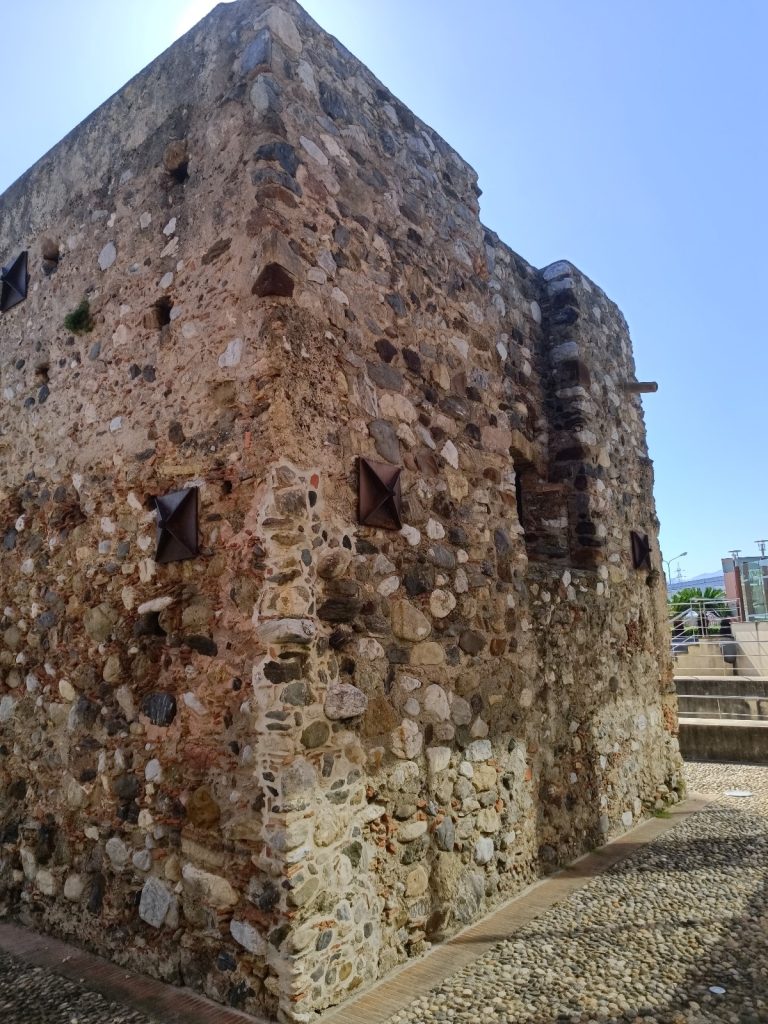
The walls are made of local stone and mortar and feature numerous patches, some of which have been hidden by restorations carried out over the years. The cantonal buildings are reinforced by squared stone blocks of local sandstone. The western wall appears to be discontinuous, perhaps due to the collapse of part of the dome, during the restoration work on the dome, of the entire structure and was reinforced in order to avoid further structural failures.
The dome is constructed of materials such as terracotta in the form of bricks or tiles. In the external part of the building it is presumed that there were three apses built along three sides of the building, excluding the entrance side, this hypothesis is supported by the fact that on the east-facing side there are some traces of an ancient apse arch just above the current window and by the fact that most of the Sicilian “Cube” have this architecture. The demolition of the apses is believed to be to be placed in the period in which it was decided to transform the “Cuba” into a small tower.
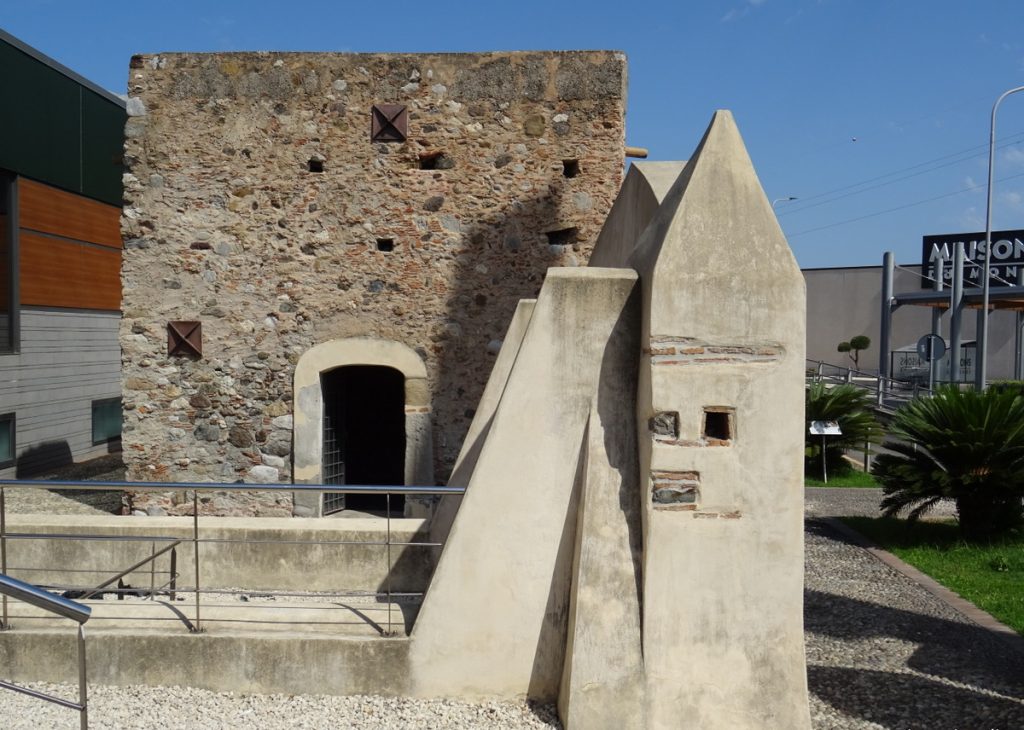
The historical road system places the Masseria district, therefore “Cuba”, in an excellent position, certainly at a crossroads of paths and roads that led directly along the coast of the Milazzo plain and, also thanks to its small size, The structure has served as a landmark over the centuries and is perhaps the reason why it survived the Arab conquest and managed to reach us.